

Primary 1 Explores Decomposition
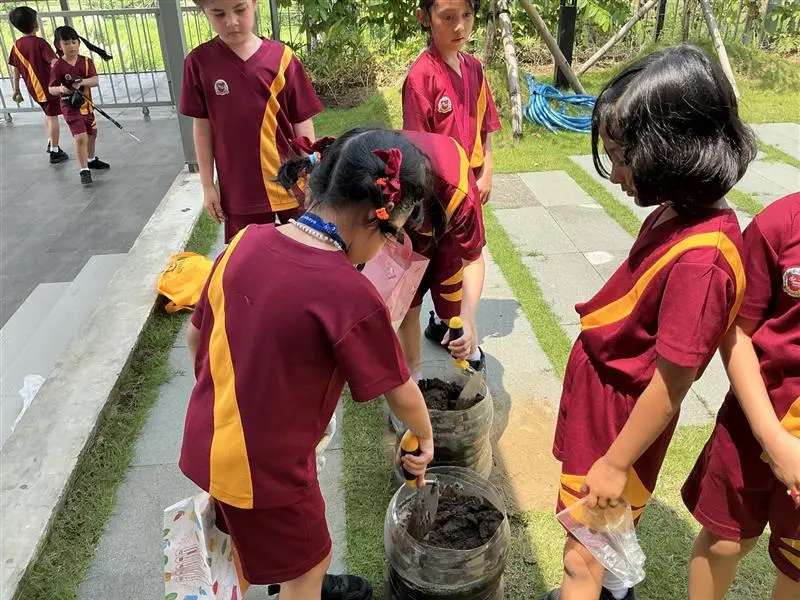
As part of the “Sharing the Planet” unit of inquiry, our Primary 1 students have been exploring an important question: What happens to materials after we throw them away? Through this inquiry, students began learning about decomposition and how different materials break down in nature over time.
To begin the investigation, students brought a selection of items from home. Together, we examined each item and discussed its material. Students then worked collaboratively to sort the items into biodegradable and non-biodegradable groups. This hands-on activity encouraged careful observation and meaningful discussions, as students shared their ideas and made predictions about what might happen to each object.
Once the items were sorted, students were invited to think more deeply. They made predictions about whether the materials would decompose and how long the process might take. These conversations helped students understand that decomposition is not instant and that materials interact differently with the environment.

Learning Through Investigation
To take the inquiry further, students carried out a simple experiment. Each group buried their items in soil-filled containers and added water to support the decomposition process. This practical approach allowed students to connect their thinking to real-world processes and reinforced scientific skills such as observing, recording, and waiting patiently for change to happen.
Over the coming days and weeks, students will revisit their containers to observe any changes. They will compare the condition of different materials and reflect on why some items decompose faster than others, while some remain unchanged.
Throughout the learning engagement, students were highly engaged and enthusiastic. They worked cooperatively, shared tools responsibly, and showed curiosity as they explored the natural world. The photos captured during the lesson show students actively participating and taking ownership of their learning.
This ongoing investigation supports students in understanding their role in caring for the planet and encourages them to think more thoughtfully about waste and sustainability. It has been a meaningful step in developing awareness, responsibility, and respect for our environment – key values within the IB Primary Years Programme.
BINUS SCHOOL Surabaya is committed to providing the best international learning environment in Surabaya, East Java, with a high quality curriculum and internationally qualified teachers, from Early Years through to the Secondary Programme. BINUS SCHOOL Surabaya empowers the future with digital excellence, personalised learning experiences, and a strong focus on student wellbeing.
By:
Josh Romero
Primary Class Teacher
BINUS SCHOOL Surabaya
Related Posts

Exploring Culture, Education, Environment, and Health in Indonesia at International Young Leaders Summit 2023
17 November, 2023

BINUS SCHOOL Surabaya: Melanjutkan Komitmen Memberikan Pendidikan Berkualitas bagi Nusantara
10 November, 2023
BINUS SCHOOL Surabaya Where Every Student’s Dream is Valued and Supported
16 September, 2025


Your Comment